British and European Barbecue: The Grill and the Smokehouse
British and European barbecue runs at two speeds — the fast grill and the slow smokehouse: Mediterranean grilling, the Basque steak, and the smokehouse tradition beneath. Part of a world tour of wood-fired cooking.
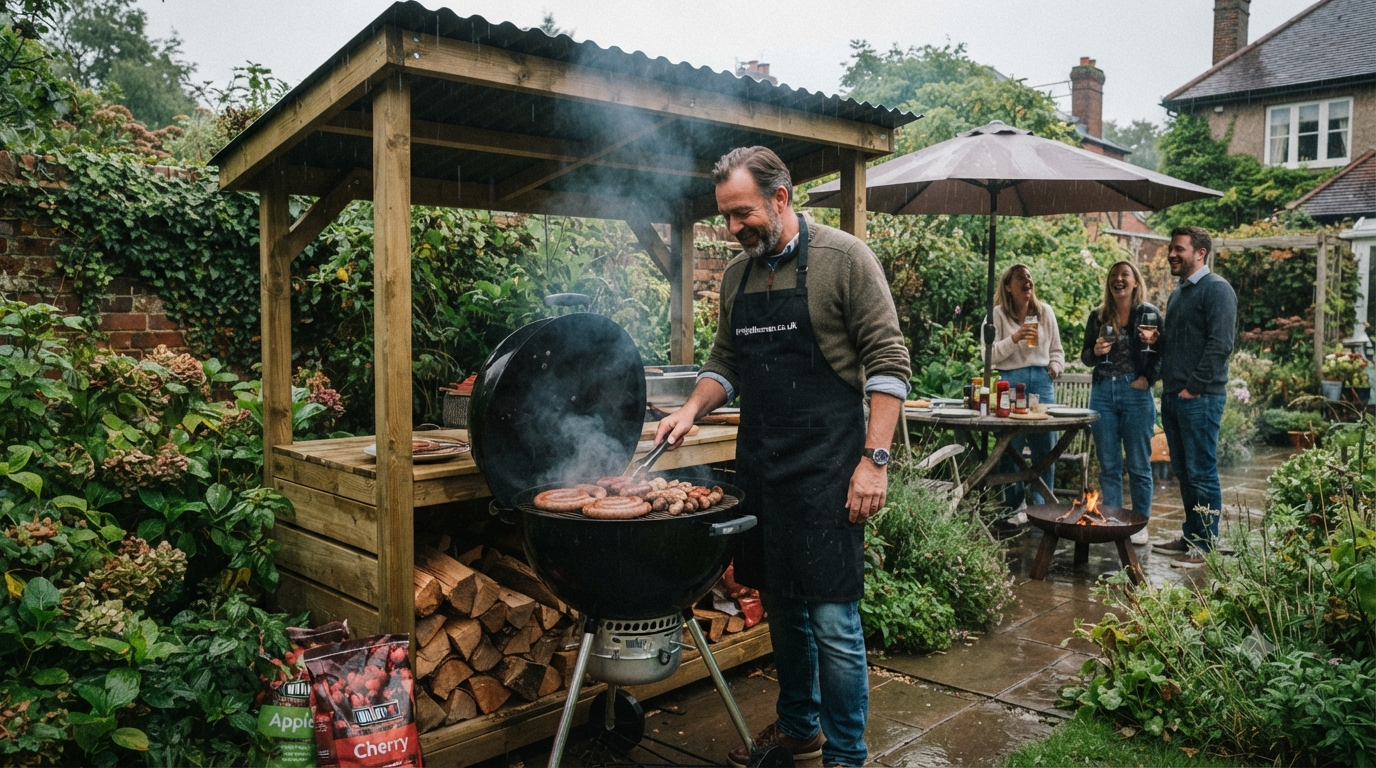
The single best decision I have made about cooking over wood was to put a roof over it. The shelter keeps the fire and the wood out of the weather, and once the forecast stops mattering you stop waiting for an excuse to light it. Boxes of seasoned oak, beech and sweet chestnut sit in there and stay dry. I can cook over wood all year, not just for a few months of it.
None of which is a British instinct. It is very much a European one.
This is the European leg of the wood-fired tour, the one I actually live in, and it is both easy to write and slightly uncomfortable — because we have a magnificent fire tradition on this continent, and Britain quite often behaves as though it belonged to somebody else.
The Fire We Put Indoors
The North American schools are held together by time. Whatever else they argue about, they agree the answer is hours.
Europe has no single technique like that. What it has, in the south especially, is a habit. In Portugal, Greece, southern Italy, Spain and across the Balkans, cooking over fire is just a normal way to cook. The grill lives outside all year. The local restaurant cooks over charcoal because that is what it has always done. A fire gets lit for two people and a couple of fish, not only for a party of twelve.
Britain is the outlier, and there are statistics on it. A five-country survey in 2016 put UK households at about ten barbecues a year — last place, behind Italy on thirteen, France and Poland on seventeen, and Germany on nineteen. The Germans out-grill us comfortably, and German summers are not exactly Mediterranean, so this is not just a simple story about sunshine.
The figure that tells the story is the one about when we barbecue. Around three-quarters of British respondents said they never barbecue in winter. In Italy, three-quarters said they do.
We light one a few times a summer, for a crowd, over instant-light briquettes — or, more often than anyone else in Europe, over gas.
That is why it never feels easy. Cook over fire often and you stop thinking about the fire. Cook over it twice a year and every fire feels like your first. We are not short of a tradition. We are short of practice.
This is not a story about Britain importing a foreign habit and getting it wrong. It is a story about Britain forgetting our own. Cooking over wood is about as continuous a European tradition as exists: the Greeks and Romans grilled meat and fish over charcoal as a matter of routine and wrote it down; the spit and the open hearth were the engines of the European kitchen straight through the medieval and early-modern centuries, when roasting meant cooking in front of a live fire, rather than shut in a box. Then the nineteenth century arrived with the enclosed cast-iron range, and after it the domestic oven. Within two or three generations the flame had been walled up and forgotten.
That did not happen everywhere at once. It happened fastest in the industrial north, in towns, in kitchens that could afford the new equipment — and Britain, first to industrialise, was first to forget. A country that had roasted more or less everything in front of a fire forgot how within a couple of lifetimes. The fireplaces stayed in the house. We simply stopped cooking on them — and now sell them as an original feature.
The cooking fire survived in two places. The south, where the range arrived later and mattered less, and where an outdoor fire has never needed a justification for eight months of the year. And in the smokehouse, north and south alike, which was far too useful to give up — a smoked ham being not just a pleasure but also a plan against a harsh January.
Which leaves traditional European fire running at two speeds, with almost nothing in the middle:
The two European temperatures. The direct grill is fast and fierce — a bed of embers, food a hand’s width above it, minutes rather than hours, and the cook standing over it the whole time. Cold smoking is the opposite extreme: the food is cured in salt first, then held in smoke below about 30°C (86°F) — ideally 20–25°C — for anything from a few hours to several days. The smoke flavours and preserves; it does not cook. Anything much above 30°C starts to cook the fish and you have made something else. Hot smoking, at 70–120°C, is the middle ground, and it is the one Europe historically used least — it is closer to what an Arbroath smokie or a Kentish smoked chicken is doing than to a kipper.
There is no European equivalent of the all-day brisket. The long low smoke is an American answer to an American problem, and our tradition either cooks fast over embers or preserves slowly in cold smoke. Most of the confusion about “European barbecue” comes from measuring it against a middle ground we never occupied. We are not doing the American thing badly. We are doing two different things.
Home Ground, and Then the Channel
Every stretch of Europe has settled on its own animal, its own heat and its own wood, and they are less argumentative about it than the Americans only because there is nothing to argue about — the wood grows where it grows and the fire follows. Before the detail:
| Region | The fire | The wood |
|---|---|---|
| Britain & Ireland | Cold smoke above all; fish, then game and lamb over embers | Oak and beech, apple and cherry from the orchard |
| The Basque Country | Aged beef chop over a bed of embers, little else | Oak, vine cuttings |
| Portugal | Sardines by the crate, piri-piri chicken | Holm oak charcoal, oak |
| Greece & the Aegean | Fast and hot — souvlaki, whole fish, lamb | Olive and vine cuttings |
| The Balkans | The roštilj: ćevapi, skewers, pljeskavica | Beech and hornbeam |
| Germany (Saarland) | The Schwenker, swung on chains over the coals | Beech |
| The Alps & Central Europe | Smokehouse: speck, ham, sausage | Beech, juniper for the finish |
| The Nordics & Baltic | Cold smoke; salmon, herring, eel | Alder, juniper |
Britain ought to start with an apology and instead gets to start with a boast, because the larder here is possibly one of the best on the whole tour, and a good deal of it works at least as well over embers as in an oven. Salt-marsh and hill lamb. Native-breed beef, well marbled enough to hold up over a proper heat. Game — venison, grouse, pigeon — lean meat whose prime cuts take well to a hot, quick fire, as long as you take them off in time. And around a very long coastline, we have mackerel, herring, oysters and langoustines that ask for little more than smoke and a squeeze of lemon.
But the thing we genuinely kept is smoke. Britain lost the grill and held onto the smokehouse — cold-smoked fish above all — and it is the one corner of the wood-fired world where we lead rather than follow. The Craster kipper on the Northumberland coast, cold-smoked over oak in sheds that have been doing it since the 1860s. The Arbroath smokie on the Scottish east coast — haddock hot-smoked over hardwood in a barrel, and protected in law since 2004. The name is allowed only to fish smoked within five miles of the town. Whole sides of cold-smoked salmon. The smoked haddock without which there is no kedgeree and no Cullen skink. All of it is fish, wood smoke and patience, and all of it is British.
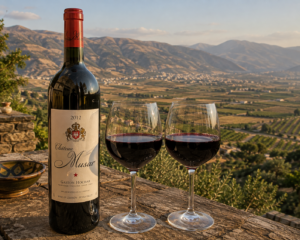
The Basque Country cooks with little fuss. Txuleta is a thick, well-aged beef chop, taken from an old dairy cow. The age is what gives it the fat and the depth of flavour. Seared over embers, salted, served. That’s it. At Asador Etxebarri, in the village of Axpe, Bittor Arginzoniz built one of the most talked-about kitchens in the world on that idea — the fire provides the seasoning, and a good ingredient does most of the rest. His ingenuity went into the grills, not the sauces — he engineers the fire instead of dressing up the food. It is the simplest cooking on this list, and the most disciplined.
Portugal comes at it from the opposite end — all rough-and-ready, none of the Basque restraint — and gets there just as well: sardines chargrilled by the crateful in the street in June, and frango piri-piri, the spatchcocked chilli chicken the Portuguese carried between Europe and Africa long before anyone thought to franchise it.
Which is where the Portugal thread runs right up to my own front door, because there is nothing wrong with the franchising of it. Nando’s is that same piri-piri chicken, carried from Portugal out to Africa and turned into a chain, and a good dish does not stop being good because someone worked out how to sell it on every high street. My order does not change: extra hot half chicken, macho peas, spicy rice, and then, since the menu and I disagree about what “hot” means, I smother the lot in extra, extra hot sauce. My wife knows it as well as I know hers. I am under no illusion about what it is — engineered to get the same plate to every table fast — but I go because I like it, and as reasons go, that has always seemed to me one of the better ones.
Greece and the eastern Mediterranean cook fast and hot — souvlaki, whole fish, and lamb over vine cuttings, in the kind of sunshine we only get in instalments. There is barely a technique to describe. Small pieces over fierce embers, a little oil, lemon and oregano, and everything off the heat before there is time to fuss over it.
The Balkans cook from the roštilj with the ease of people who do it constantly, not just for special occasions — ćevapi, the little skinless sausages; ražnjići on the skewer; and pljeskavica, a broad, well-seasoned patty of mixed meats. Beech and hornbeam, hot coals, minutes a side.
Germany contributes one of the more enjoyable pieces of equipment in Europe. The Saarland Schwenker is a grate hung on three chains from a tripod over a beechwood fire, and the cook swings it — continuously, gently, the whole time — so the meat passes in and out of the heat rather than sitting in it. It is the Schwenker that gives the marinated pork steak its name, and it only works if someone keeps it moving — which, for anyone who likes having a job to do at the fire, adds to the fun.
And beneath all of it runs the Continental smokehouse, the twin of ours in Britain, older than any of the grilling and considerably more serious. Long before smoke was a flavour, it was arithmetic. A pig killed in November had to feed a household until spring, and salt and smoke were what bought those extra months. Get it wrong and you were not facing a poor dinner. You were facing a hungry March. That is the line behind Black Forest ham, behind the speck of the Alto Adige, behind the paprika-scented charcuterie of Spain and Central Europe, and behind the fifteen hundred or so distinct sausages Germany alone lays claim to. A Scottish smokehouse and a Bavarian one are the same answer to the same primary problem: survival, not flavour.
The Trees We Have, and the Ones That Will Kill You
Europe’s palette is the well-behaved temperate hardwoods: oak and beech for steady, long-lasting heat, apple and cherry for sweetness, dense hornbeam for a long coal bed, and, in the south, olive and vine cuttings that flare hot and fast and are gone in twenty minutes. The most dangerous woods here are not in the forest but in the flowerbed — the European garden is one of the most poisonous on the whole tour, and yew, laburnum, cherry laurel, rhododendron and oleander could all reach fires through hedge-clearance and all belong nowhere near food.
That is the short version. The full list — every tier, the Black Forest fir exception, and what is actually worth buying here — is in British and European Barbecue Wood.
Making It Ordinary
What Europe has to teach is not a method. It is a lowering of the stakes. The parts that travel:
- Frequency over ceremony — one fire, one fish, on an ordinary Tuesday night, for no occasion at all. The skill comes from repetition, and repetition only happens when the event stops being an event.
- Two speeds, not three — the European inheritance is fast over embers or cold smoke over days. The long low smoke in between is borrowed, mostly American, and I do plenty of it myself. Knowing which of the three you are doing matters, because each wants a different fire and a different wood.
- The ingredient is the recipe — the Basque position, and the hardest one to hold. Salt, fire, and the confidence to stop.
- Local wood, ideally free — orchard prunings, vineyard cuttings, a neighbour’s felled apple. The best fuel in Europe has always been someone else’s waste.
In a British garden, with a kettle, a firepit or a shelter full of good intentions, that looks like:
- Cook something small. A mackerel. One chop. A steak. The temptation is to justify the effort required for the fire with volume, and volume needs an occasion, and an occasion is what makes it all stressful and rare.
- Let it burn down. Cook over the glow, not the flame. A European grill fire is a bed of embers, kept going with a little wood as it needs it, not a blaze you spend the evening trying to stay ahead of.
- Shop the larder we already have. Our lamb, our game, our mackerel and oysters, our orchard woods are as good as anything on this tour, and none of it needs importing.
- Take the smokehouse seriously. A cold-smoked side of fish at home is more achievable than most people assume, and it is the one part of this tradition where Britain is not the student.
- Learn three woods properly rather than collecting nine. Oak, beech and apple will cover almost everything you will ever cook.
None of that needed a holiday, a heatwave or a Basque grill-master. It needed a roof, dry wood, and giving up the idea that a fire is only worth lighting when there is someone to cook it for.
We have the woods, the larder and several thousand years of form behind us. The only thing left to give up is the idea that it has to be August.
And the yew. Give up the yew.
Further reading
These guides are on their way — this section will grow as the series does.
- A guide to British and European smoking woods
- The British live-fire larder: lamb, game and shellfish over wood
- Cold smoking at home: kippers, salmon and the British smokehouse
- Cooking over vine cuttings: the fast Mediterranean grill
- Recipe: whole mackerel over apple and oak
Back to the pillar: Wood-Fired Cooking Around the World